Pink lace, analogue pastiches and post-industrial sounds
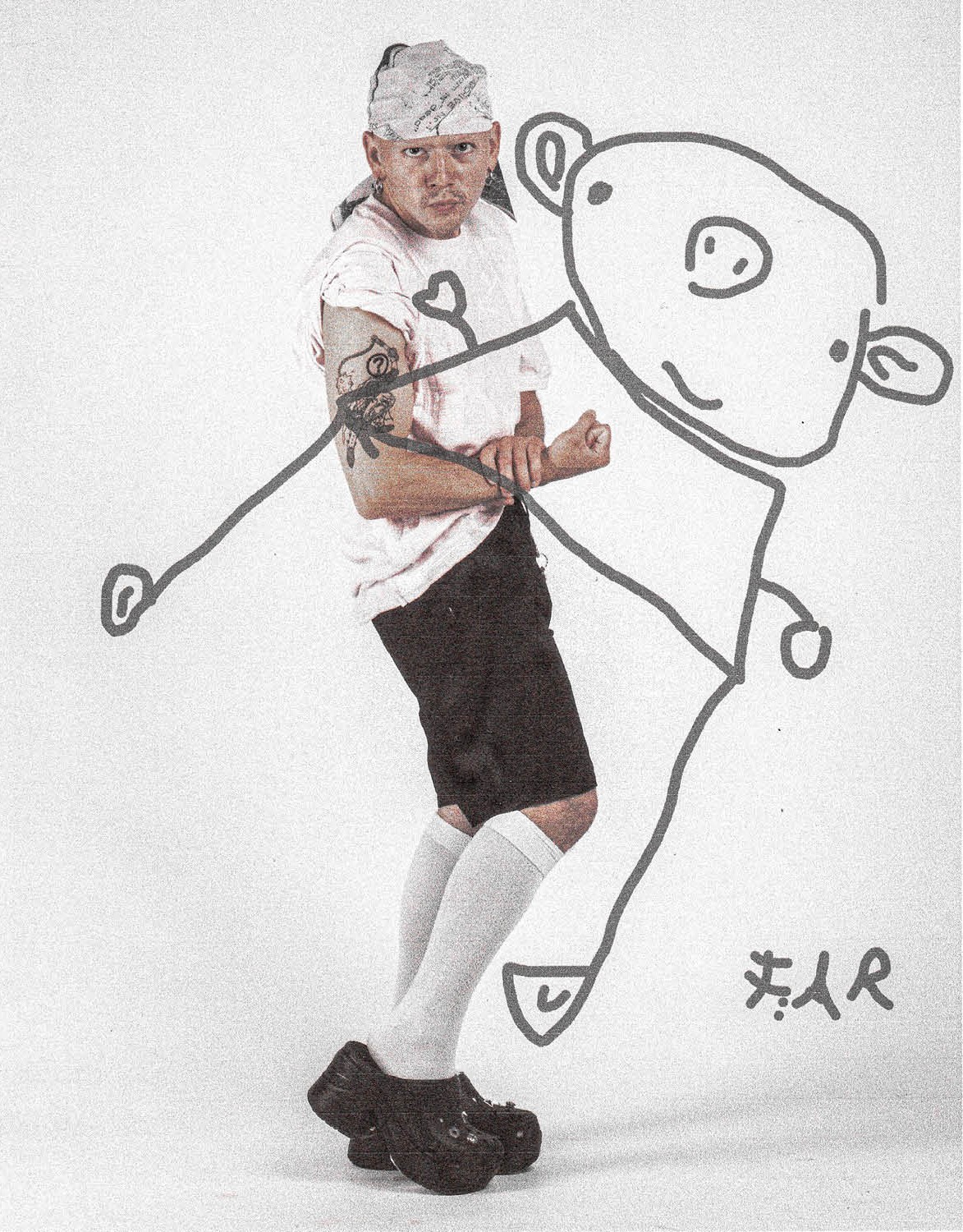
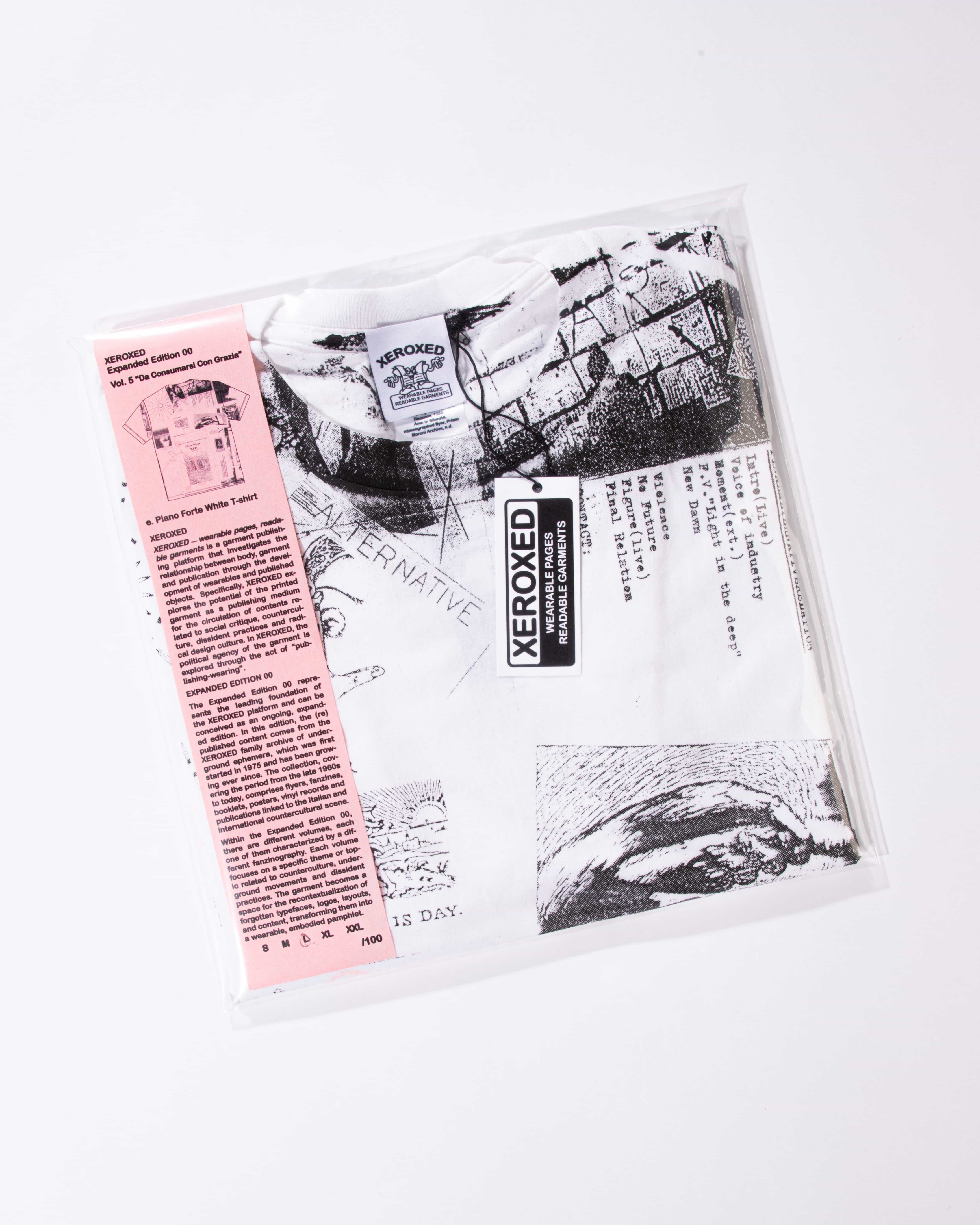
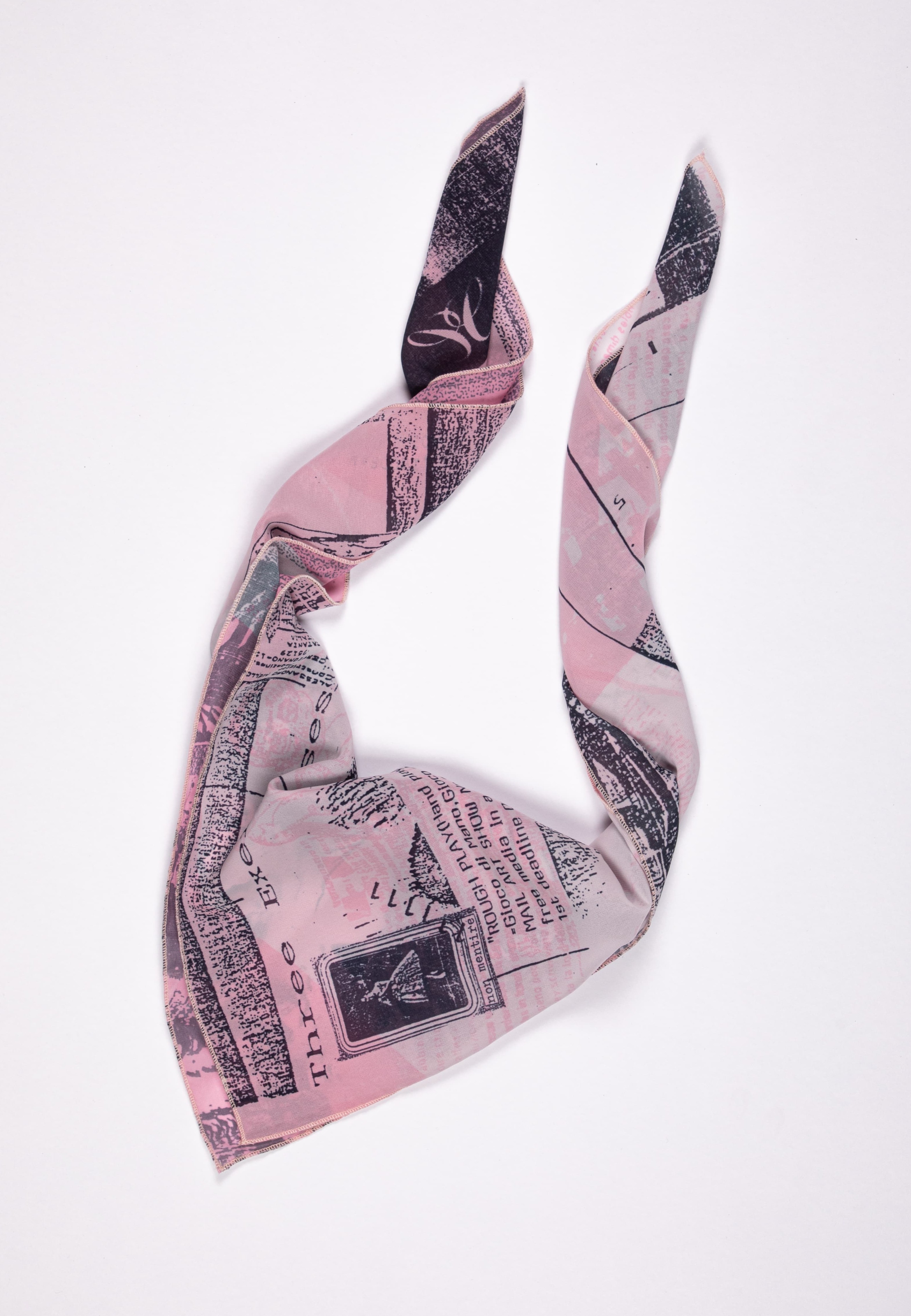
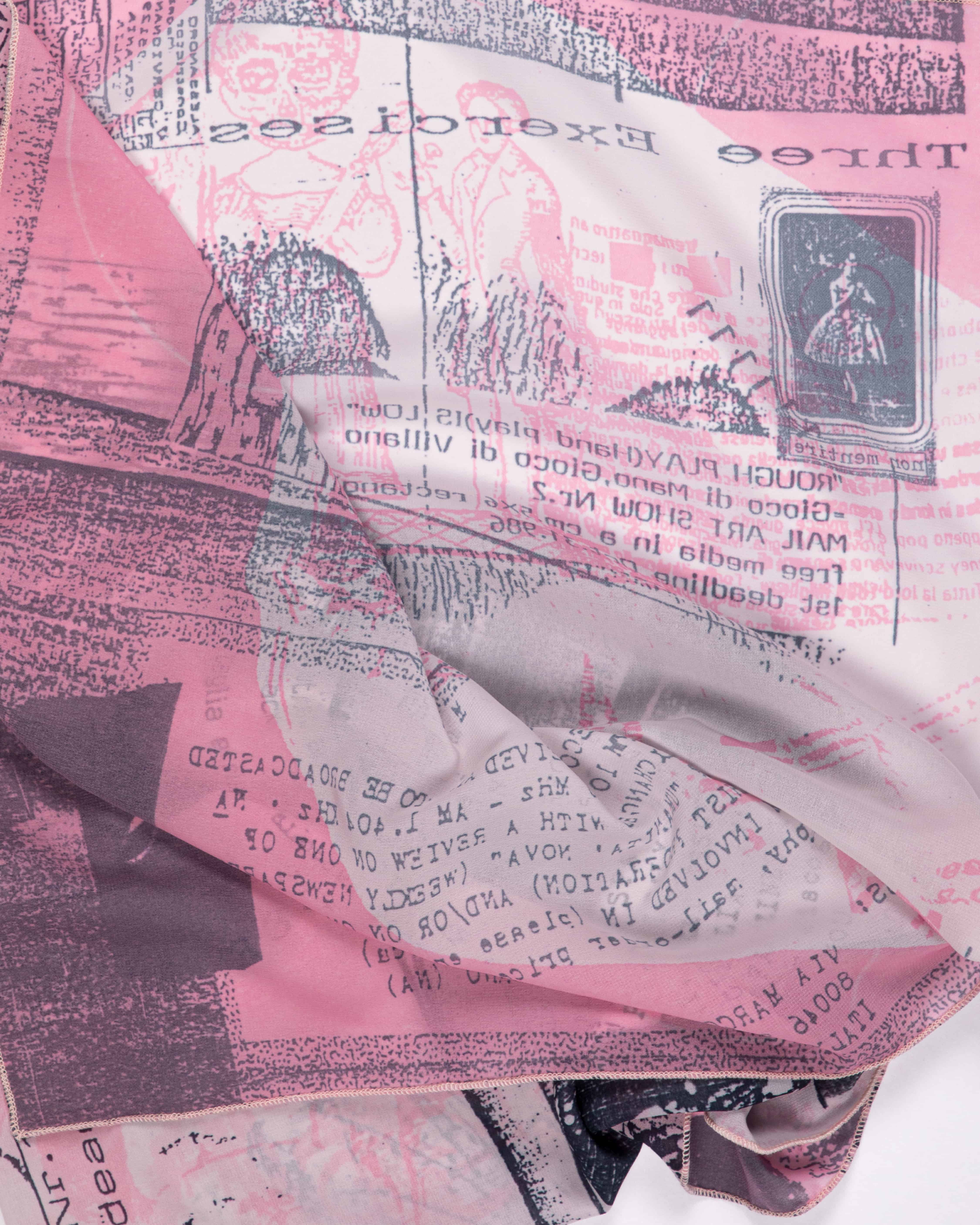
XEROXED Vol. 5 “Da Consumarsi with Grazia” is a garment series including four T-shirts, one sweater, and one foulard. Unlike previous Expanded Edition 00 volumes, this one does not include an extended fanzinography or external contributors. Instead, it was designed around a single object extracted from the XEROXED archive of underground ephemera: a vinyl album by F:A.R. (Final Alternative Relation), one of the first post-industrial Italian bands, founded in 1980 in Savona.
The album was originally published in 1985 in a limited edition of 1000 copies and is titled “Da Consumarsi Con Grazia” (“Handle with Grace”) which I always thought was an evocative title. The LP’s front cover features a rough, childish drawing of a green pig on a saturated pink lace background, while the back cover displays, right in the center, a blue card depicting a tiny lady wearing a dress with a large gown, presumably dating back to the 1700s. Inside the packaging, the vinyl is transparent and the album title and track list are written in italic with a serif typeface, with the song titles being whimsical as the packaging itself: “Lucciole preservate” (“Preserved Fireflies”), “Gesti Rapiti” (“Captured Gestures”), and “Ninna Neta” (“Lullaby”).
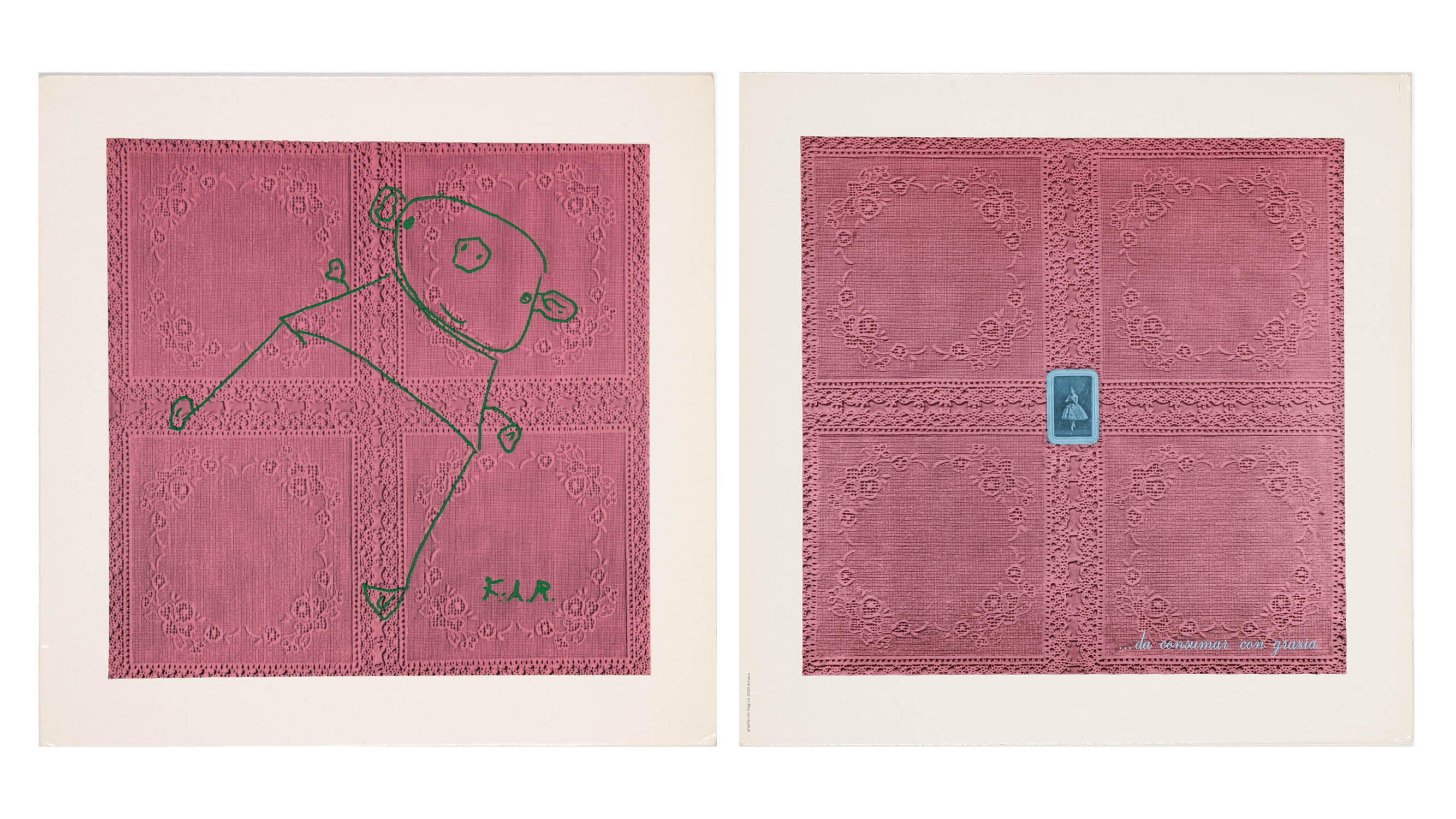
In contrast with the graceful aesthetic of the vinyl, the thirteen tracks pressed on it are an experimental, avant-garde pastiche of delicate, gentle melodies mixed with rough, noisy, post-industrial sounds. This unusual aesthetic and melodic dichotomy transforms the album into a Pandora-like object in which its formal features hide its content in a mysterious, unexpected manner.
Since discovering this album in 2018, I have always found its clashing aesthetic juxtaposition to be its most fascinating aspect. At first, I was tricked into thinking I was going to listen to some ethereal, soothing music, when in reality the morbid, almost idyllic aesthetic hides a rough, industrial listening experience.
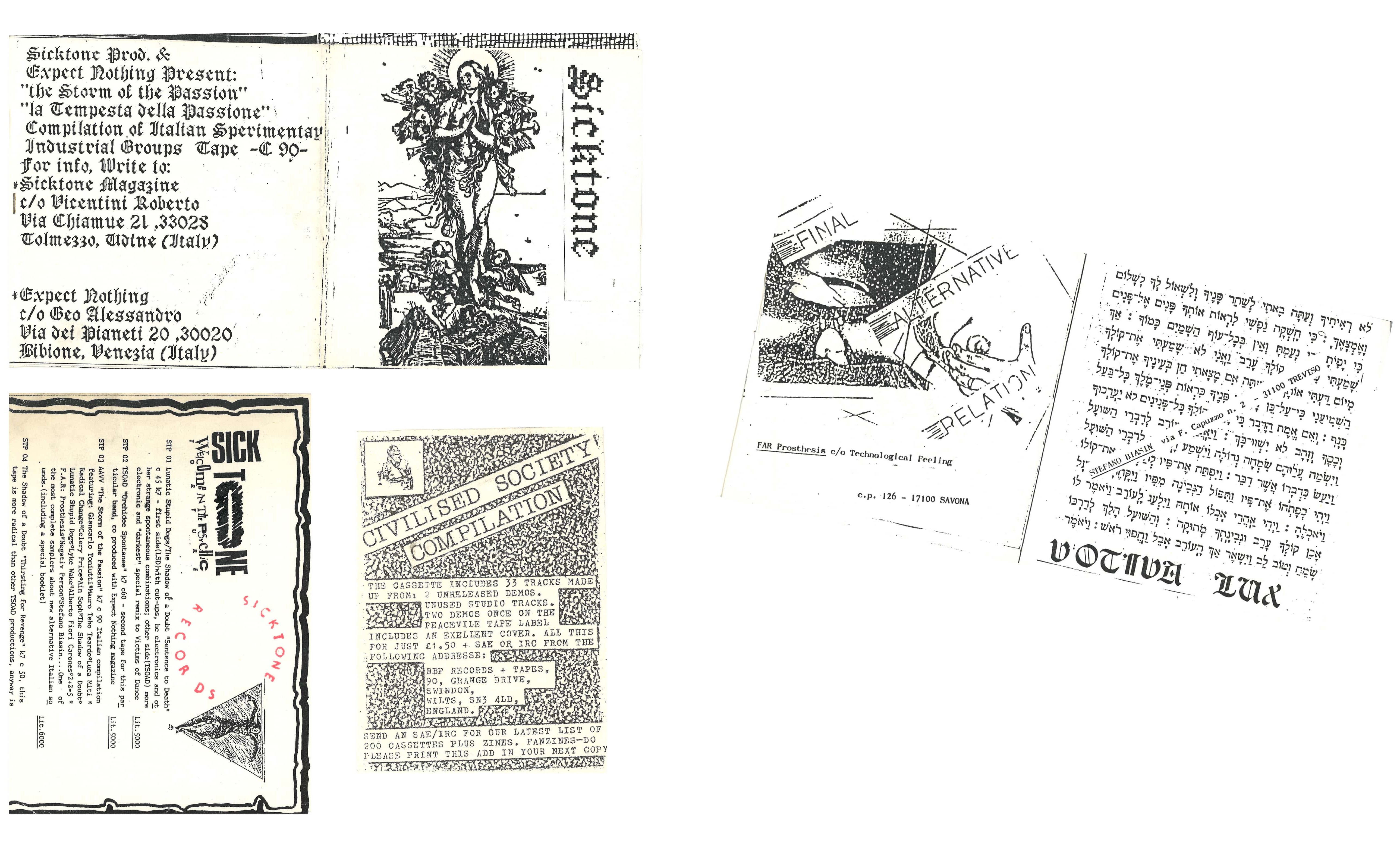
Another aspect that fascinates me—or rather, has been haunting me for years—is the presence of that composed, puritan lady on the back of the LP cover. When I first got my hands on this vinyl, it wasn’t the first time I had encountered her, which left me quite disoriented. Flyers, fanzines, random mimeographed sheets dating back to the 80s — always in the same three-quarter pose, gently staring at me. That lady appeared countless times during my research sessions in the XEROXED archive, yet I couldn't, and I still can’t, tell what’s her origin, where she comes from, what she wants. I like to imagine that the zinesters, self-publishers and musicians placed her in their zines for a reason, and that she carries some sort of subliminal message, or is the idol of some secret movement. Most likely, as with much of the material to be found in zines and Italian countercultural publishing from the 70s and 80s, she was stolen, re-scanned, modified, and republished for no specific reason — gradually becoming more and more grainy and losing her facial features.
From my research, the last known appearance of this lady dates back to 1993, where she stands in the corner of a xeroxed concert flyer. After that, the puritan lady vanished without a trace. This mysterious lady-hunting kept me looking for her for years with no success. The idea that she might have died due to an unperformed re-scanning made me very sad, and I truly wanted to bring her back to life at some point.
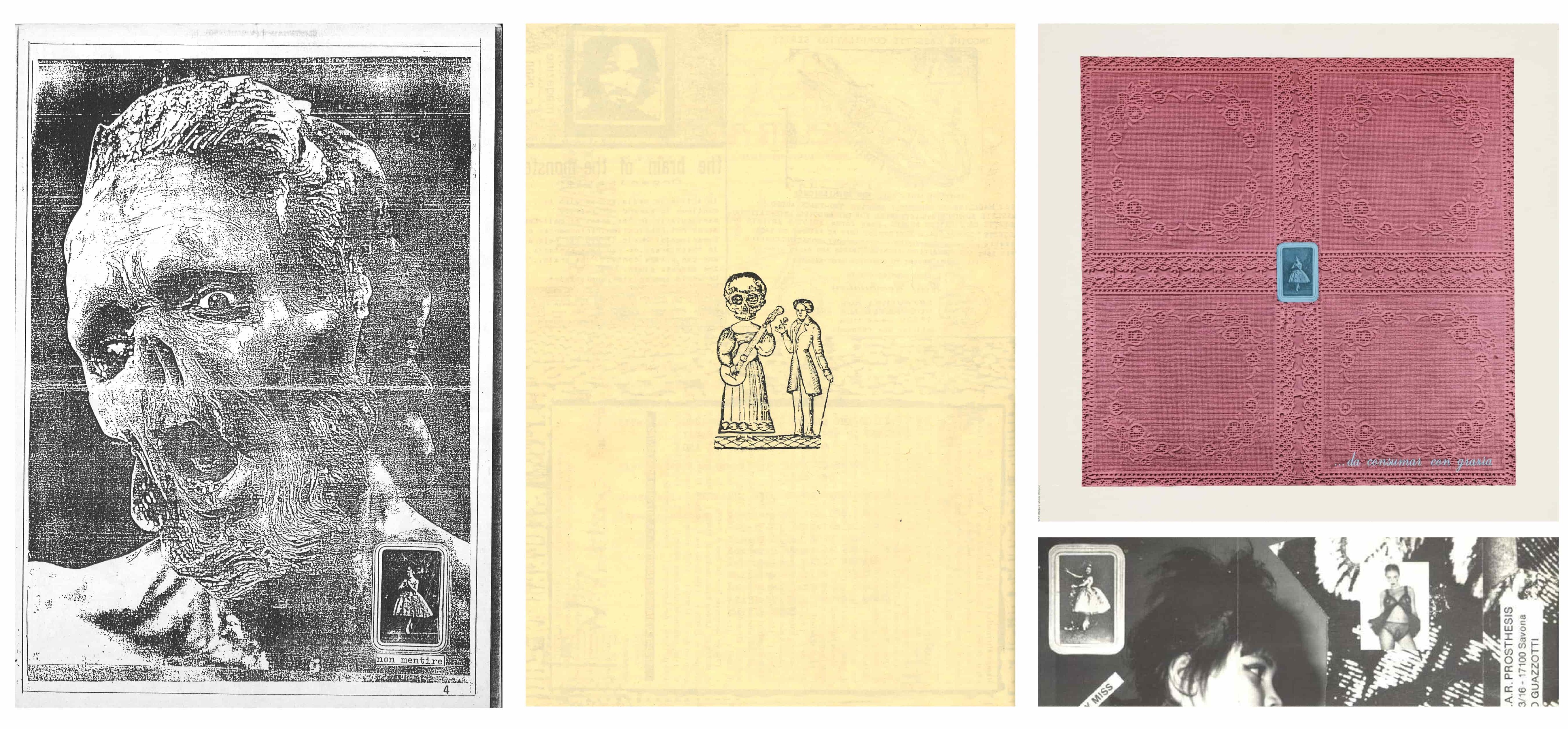
When I first started working on the artwork that is now printed on this XEROXED garments series, I was just randomly playing with my copy machine with no specific goal in mind. Photocopying is my therapeutic knitting, which explains why I have a secret dealer of compatible cartridges that discreetely refills them weekly without asking any question. During the copy art session, something suddenly clicked, and I remembered the lady on the back cover of the F:A.R LP. I decided it was the right time to re-scan and bring her back to life, no matter what I would do with the artwork.
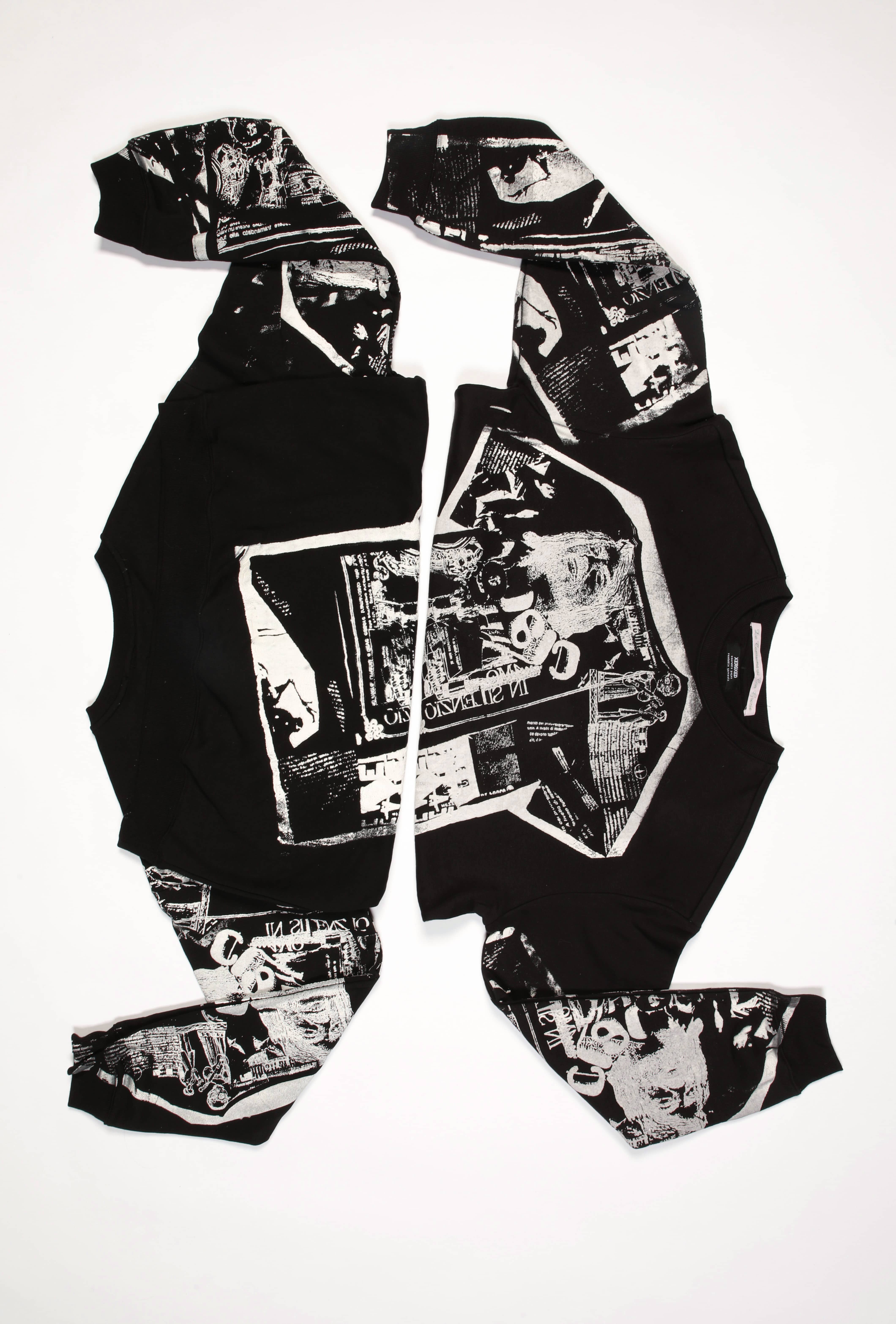
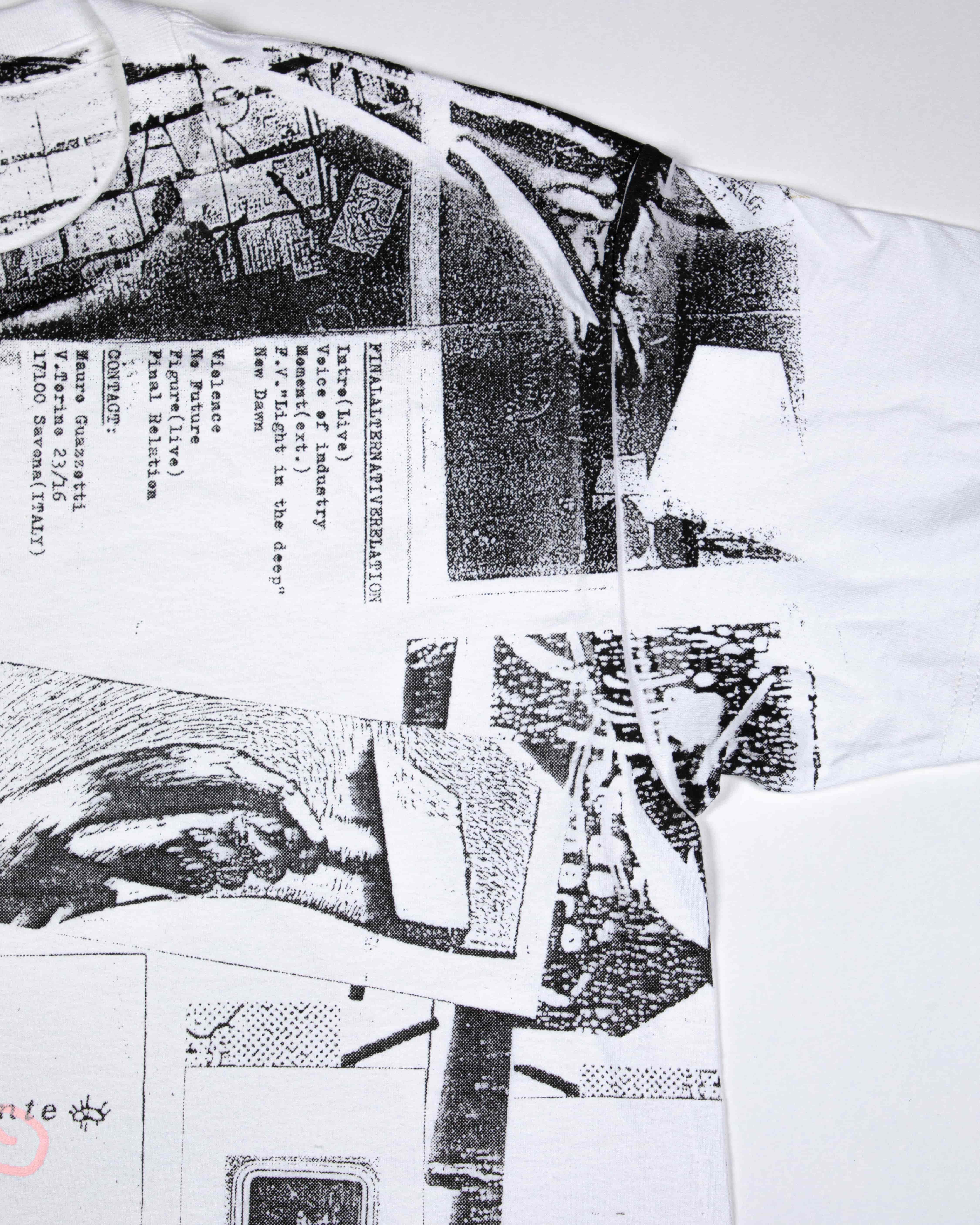
After the scanning, I looked at her and thought she might need some restyling and a less puritan look, so I transformed her into a sort of hybrid mistress-musician that rejects every man she encounters. She has always been composed and silent, so I decided to juxtapose her with a grainy, mimeographed undated flyer extracted in one of my research sessions at the Primo Moroni Archive in Milan. The sheet reads “amo in silenzio” (“loving in silence”), which I think is a concise, yet deeply emotional phrase. The flyer gives me a similar sensation as the F.A.R vinyl, a sense that even the punk-est, roughest aesthetic can hold a romantic stance, light and delicate words hidden under tons of black ink.
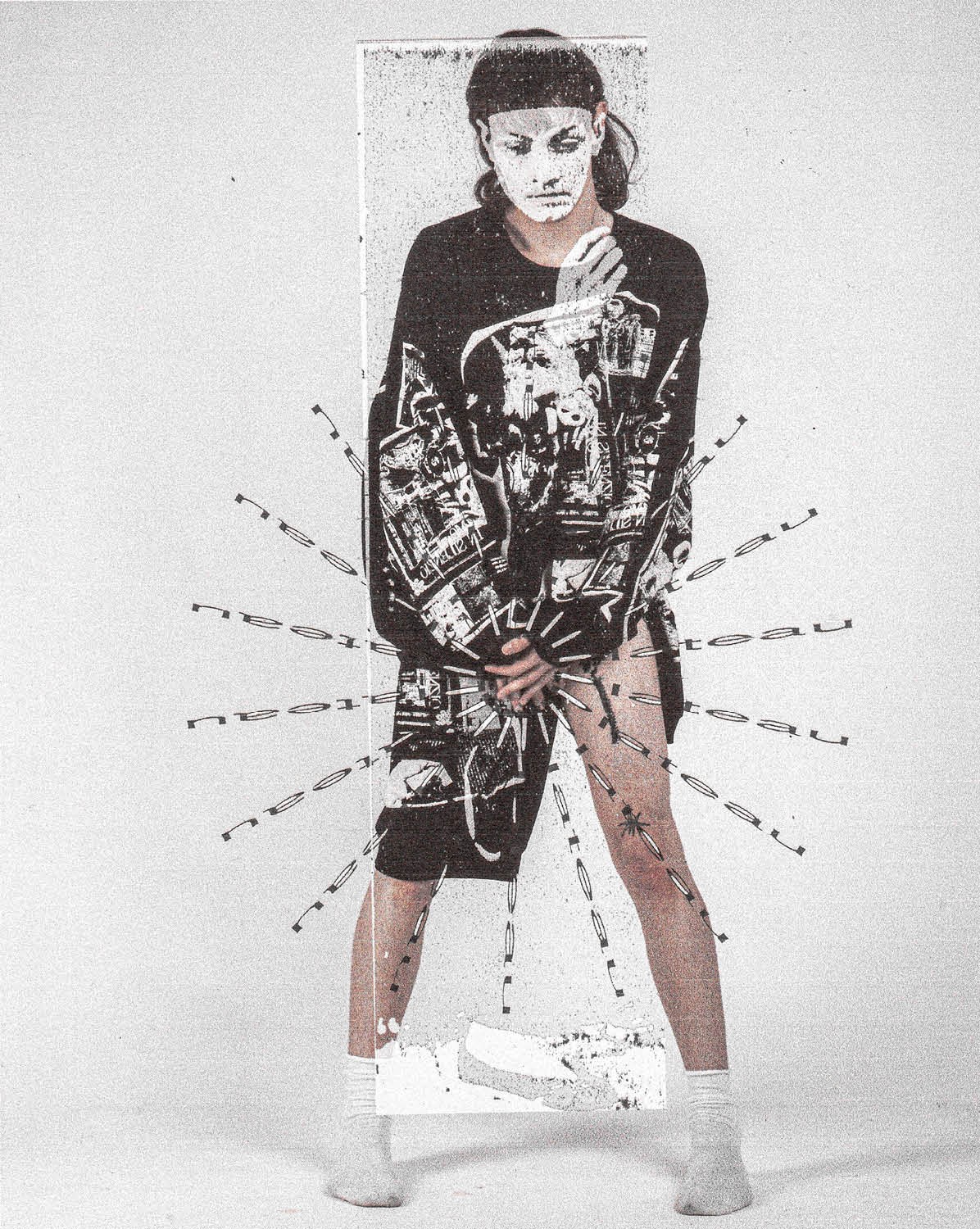
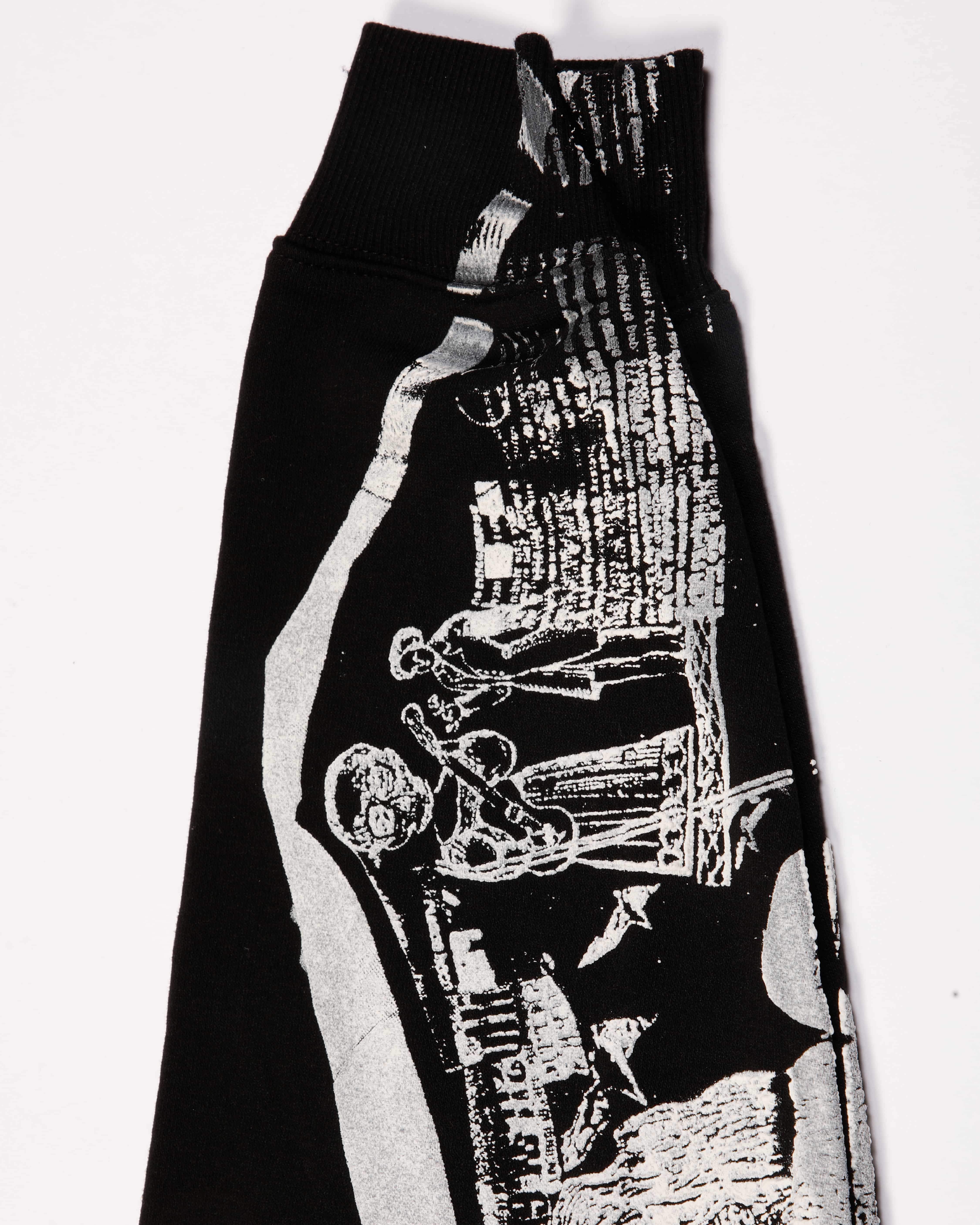
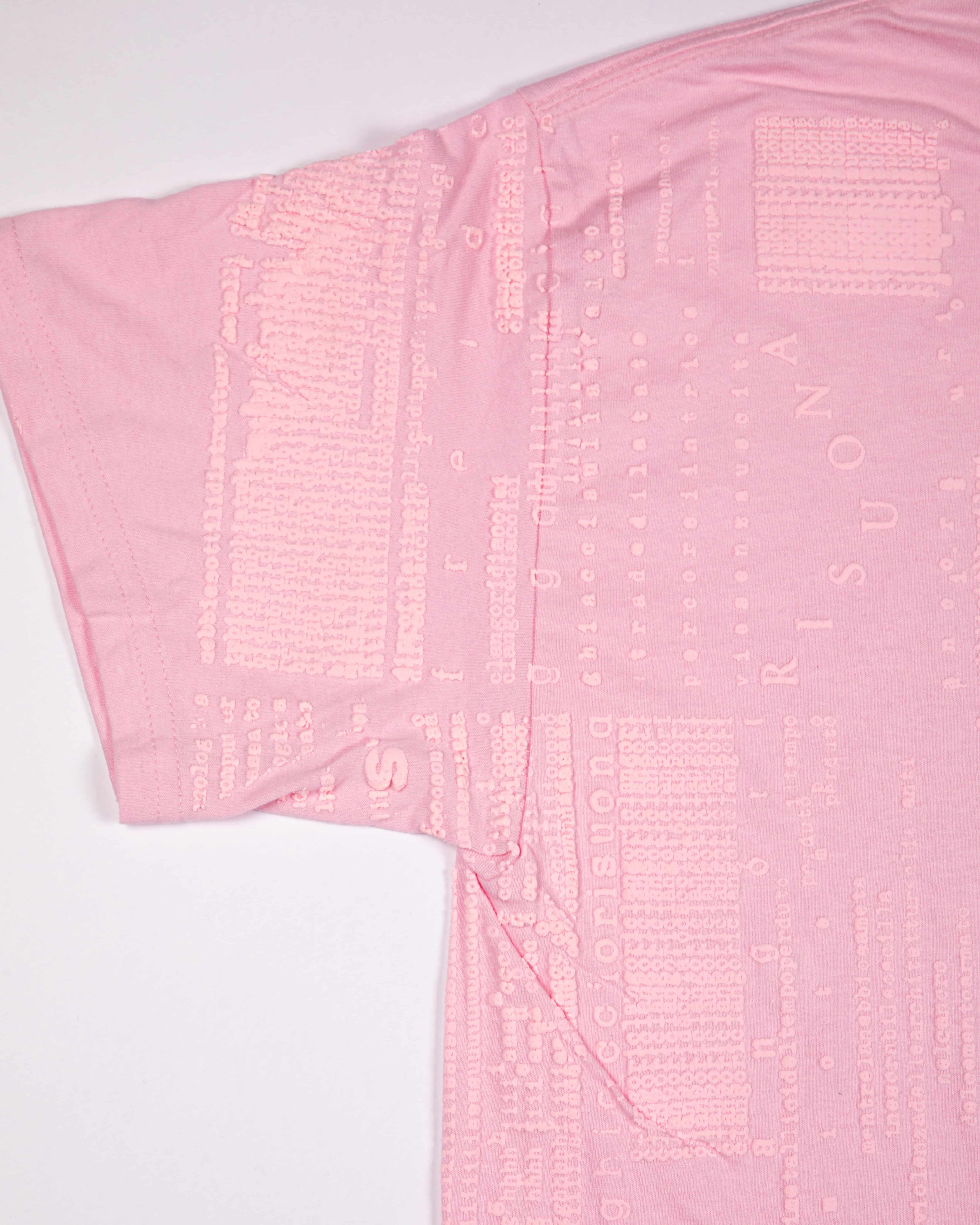
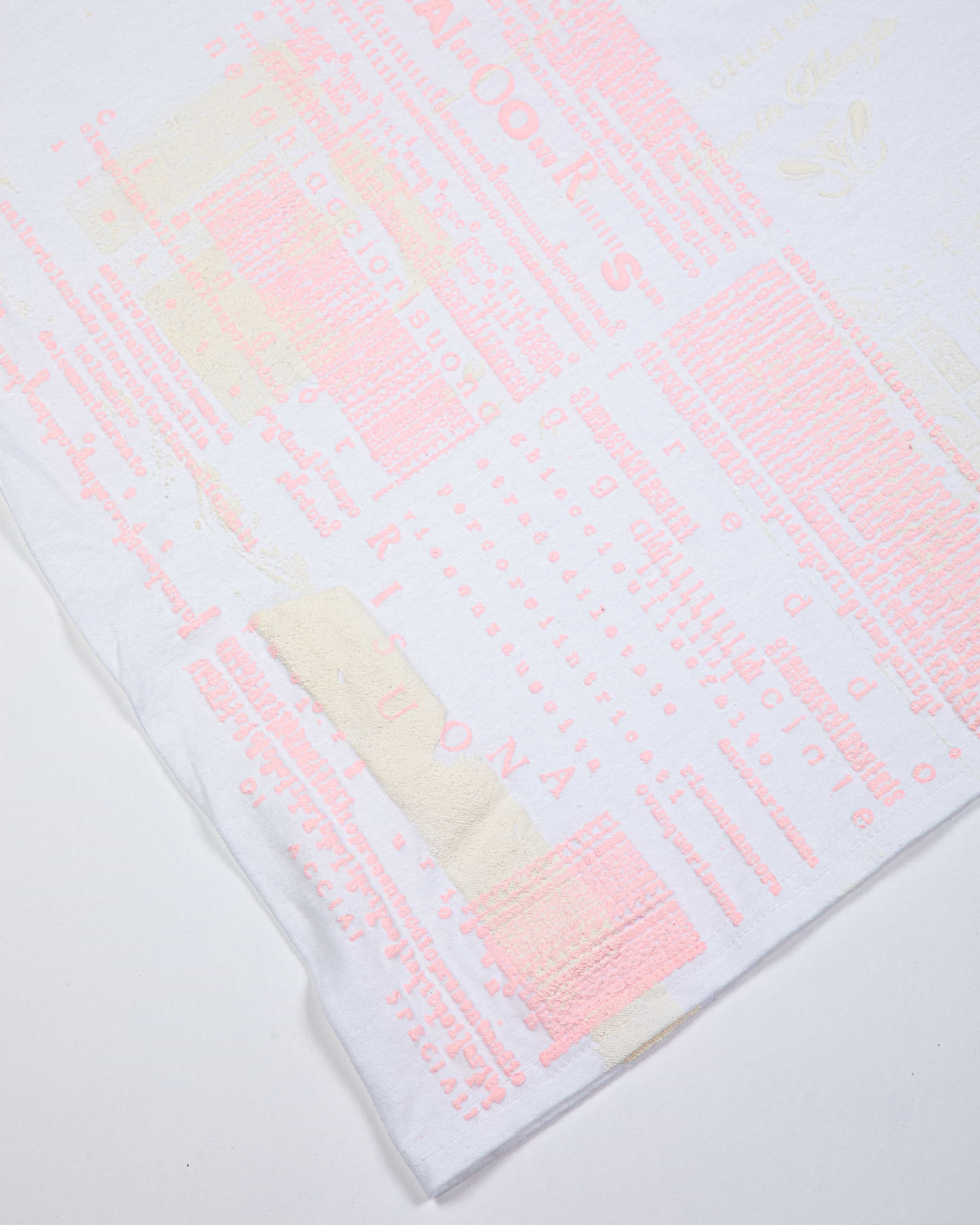
The rest of the analogue pastiche came together quite naturally, and initially I kept it aside without wanting to use it for anything specific. Earlier this year, I thought that perhaps 2025 was the right time to make the lady come out of her cryogenic sleep and let her circulate once again, just as she did in 1985. That’s when I began experimenting with printing the artwork on fabric, using white inks mixed with puffing base.
Thanks to this technique—where the ink ‘puffs up’ when exposed to high temperatures—the lady becomes almost tactile and grainy as the lace on the cover of the “Da Consumarsi con Grazia” LP. The meta-T-shirt printed on the sweaters was created entirely through analogue methods: taping the silkscreen frame, ripping and cutting the artwork here and there. The garments are then patchworked directly on the silkscreen table, allowing me to print them all at the same time. This process creates a sense of continuity between the sweaters, with each one complementing the other.
The F.A.R album, and the puritan lady served as both inspiration and foundation for this XEROXED garments series, through its aesthetic, narration, and dichotomic play.
After more than fourty years, the lady is finally free to walk again—physically, through the XEROXED’s wearers.
Alia Mascia // XEROXED Founder & Creative Director
From Page to Garment to Public
Silkscreen printing with water-based inks and tactile inks on cotton; sublimation print on discarded polyester.
Nemesis, no. 1, 2nd ed., Pomigliano d’Arco, c. 1987.
Nemesis, no. 3, Pomigliano d’Arco, 1988.
Sicktone R.e.c.o.r.d.s catalogue, Udine, c. 1983.
F.A.R, Da Consumarsi Con Grazia, vinyl record, ADN Records, 1985.
Amo In Silenzio, mimeographed flyer, Primo Moroni Archive, n.d.